
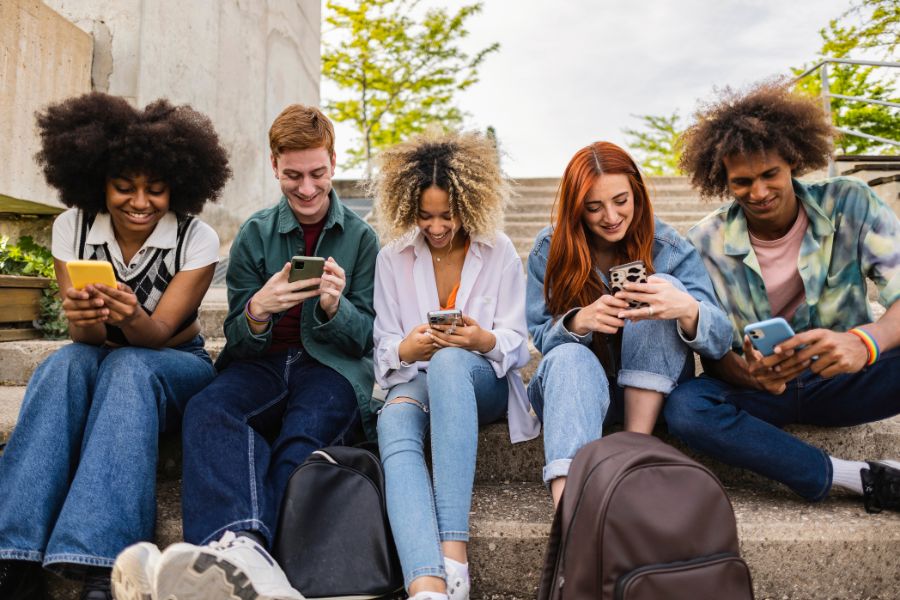

Once upon a time, love letters took days to arrive, and stolen glances held more weight than a thousand Instagram likes.
Fast forward to today, and relationships are being shaped—sometimes even shattered—by social media. What was meant to bring people closer now seems to be pulling them apart, one notification at a time.
Have you ever been in the middle of a conversation, only to realize your partner is lost in an endless scroll?
Or maybe you’ve felt an unexpected pang of jealousy over a like, a comment, or an old connection resurfacing in their DMs?
Social media has blurred the lines between personal and public, real and curated, intimacy and performance.
But here’s the thing—social media isn’t the villain.
It’s how we use it that makes all the difference. When does casual scrolling turn into a problem?
How do you stop social media from quietly eroding your relationship?
Let’s talk about the signs, the boundaries, and the mindset shifts that can keep love thriving in the digital age.
How to Stop Social Media from Ruining Your Relationship
1. Identify the Ways Social Media Is Affecting Your Relationship

It starts subtly.
A quick check of notifications turns into an hour of scrolling. A harmless DM exchange sparks an argument. A partner’s online persona begins to feel different from who they are in real life.
Social media has a way of creeping into relationships unnoticed—until one day, it’s causing tension, insecurity, or even distance.
Maybe you’ve felt unheard because your partner is too absorbed in their feed.
Or perhaps you’ve caught yourself comparing your relationship to the picture-perfect couples online, wondering if you’re missing something.
Sometimes, it’s the late-night scrolling replacing meaningful conversations or the silent frustration of seeing your partner engage with others more online than they do with you.
Before you can fix a problem, you have to recognize it.
Is social media a harmless pastime in your relationship, or is it slowly becoming a third party?
2. Set Clear Boundaries for Social Media Use

Love thrives in presence, but how can you be fully present when your attention is divided between your partner and a screen?
Social media has a way of blurring the lines between personal time and digital distractions, making it easy to neglect real-life connections without even realizing it.
Maybe it’s the habit of checking your phone first thing in the morning instead of sharing a quiet moment together.
Or those dinners where conversations compete with scrolling. Worse still, arguments arising from misunderstood online interactions—likes, follows, or harmless exchanges that suddenly don’t feel so harmless.
Boundaries aren’t about control; they’re about respect. A mutual agreement on when, where, and how social media fits into your relationship can make all the difference.
3. Prioritize Real-Life Connection Over Virtual Engagement

It happens gradually.
One moment, you’re laughing together over inside jokes, sharing long conversations, and locking eyes across the room.
The next, you’re sitting in the same space but worlds apart—one of you lost in a TikTok loop, the other staring blankly at a screen, both scrolling through lives that aren’t your own.
You tell yourself it’s nothing.
Just a few minutes online. But then minutes turn into hours.
The warm, familiar sound of your partner’s voice becomes background noise to a trending video. Date nights feel less magical because halfway through, one of you reaches for a phone.
The glow of the screen replaces the glow in each other’s eyes, and before you know it, you’re more connected to strangers online than to the person beside you.
Love isn’t built in comment sections or through perfectly edited stories.
It’s built in stolen glances, in shared laughter, in quiet moments where words aren’t needed. But when social media begins to steal those moments, something shifts. The bond weakens. The emotional intimacy fades.
The relationship starts to feel… hollow.
4. Avoid Oversharing Your Relationship Online

Love is a private language—one that loses its meaning when spoken too loudly.
Yet, in today’s world, many relationships have become performances staged for an invisible audience. A romantic dinner isn’t complete without a perfectly angled photo.
A heartfelt moment feels incomplete unless it’s shared in a caption. Arguments? They sometimes find their way into cryptic posts or passive-aggressive tweets.
At first, it seems harmless—just sharing happiness, right?
But over time, something shifts.
The focus moves from experiencing the relationship to curating it for others. You start wondering how your love looks from the outside rather than how it feels on the inside.
And when problems arise, instead of facing them together, you leave digital breadcrumbs—hoping for validation, sympathy, or attention.
Not every kiss needs an audience. LOL
Not every milestone needs a post. Some of the most beautiful moments in love are the ones the world never sees. Because when a relationship becomes too public, it invites unspoken pressures—comparisons, expectations, and sometimes, unwelcome opinions.
5. Address Jealousy and Insecurities Triggered by Social Media
It starts as a passing thought—a like on someone’s picture, a comment that feels a little too familiar, a follow that makes you wonder, Why them? You tell yourself it’s nothing. But the thought lingers, growing into suspicion, then insecurity, then maybe even resentment.
Social media has made access easy.
Too easy.
Old flames are just a message away. Strangers can engage with your partner in ways that feel intimate yet casual.
And in a world where everyone shares their best angles and happiest moments, it’s easy to feel like you’re competing with illusions of perfection.
The danger isn’t just in what’s happening online—it’s in how it makes you feel offline.
That tension in your chest when you see a certain notification.
The silent overthinking. The way you start watching your partner’s digital behavior more than you watch their real-life actions. Suddenly, trust begins to erode—not because of clear betrayal but because of imagined possibilities.
But is it really about social media?
Or is it about something deeper—your own fears, past experiences, or even a real disconnect that’s making you feel uneasy?
Social media doesn’t create insecurity; it only magnifies what’s already there.
6. Establish Trust and Transparency in the Digital Space
Trust isn’t just about knowing your partner won’t betray you—it’s about feeling secure even when you’re not looking.
But social media has changed the way trust operates. It’s no longer just about faithfulness in the real world; it’s also about the boundaries of digital interactions.
A healthy relationship doesn’t require constant surveillance.
You shouldn’t have to second-guess every online exchange or feel the need to check their messages to feel at peace.
True transparency is not about handing over passwords or proving innocence—it’s about an open, honest connection where neither partner feels the need to hide.
When trust is strong, social media becomes just another tool, not a threat.
It no longer holds the power to disrupt your peace or shake your confidence. Instead of secrecy, there’s openness.
Instead of suspicion, there’s assurance. And in a world that constantly demands attention, your relationship remains a place of certainty and stability.
7. Create Tech-Free Quality Time Together
Love doesn’t thrive in distractions—it grows in undivided moments.
Yet, in a world where notifications buzz every few seconds, carving out time free from digital interruptions has become a rare luxury.
Think about the last time you and your partner spent time together with no screens involved.
No background scrolling.
No quick text replies.
Just the two of you, fully present.
Moments like these strengthen the foundation of a relationship, reminding you why you chose each other in the first place.
Creating tech-free time isn’t about eliminating social media; it’s about reclaiming your connection.
Whether it’s a no-phone dinner, a long walk without digital interference, or simply setting a rule to put devices away during conversations, small changes can make a big difference.
The goal is simple: to make sure technology serves your relationship, not the other way around.
8. Be Mindful of Comparisons and Unrealistic Expectations
Social media is a gallery of perfect moments—flawless smiles, grand romantic gestures, picture-perfect vacations.
But behind the filters and well-crafted captions, the reality is often far less glamorous.
What you see online is a highlight reel, not the full story.
Yet, it’s easy to fall into the trap of comparison, measuring your love against carefully curated illusions.
One minute, you’re content in your relationship.
The next, you’re questioning why your partner doesn’t post about you as much as someone else does. Why your dates don’t look as extravagant?
Why your love story seems… ordinary.
But love isn’t meant to be performed for an audience.
It’s not defined by likes, shares, or grand displays.
True love is found in the quiet, unfiltered moments—the ones that don’t always make it to social media.
Staying grounded means recognizing that your relationship is yours alone. It doesn’t need to fit an online mold or live up to unrealistic standards.
When you embrace the beauty of your unique connection, you stop chasing someone else’s version of love and start appreciating your own.
9. Use Social Media Positively in Your Relationship
Social media doesn’t have to be a wedge between you and your partner—it can also be a bridge.
When used intentionally, it can strengthen your bond rather than weaken it.
Supporting each other’s online presence is one way to build a sense of partnership. Whether it’s engaging with your partner’s posts, celebrating their achievements, or simply acknowledging their interests, small digital gestures can make a difference.
It’s not about performative love; it’s about showing appreciation in ways that matter to your partner.
Beyond that, social platforms can be a space for meaningful interactions.
Sending a funny meme, sharing an inspiring post, or even engaging in lighthearted banter online can add another layer of connection to your relationship.
It’s about using social media as an extension of your love, not a distraction from it.
When approached with mindfulness, social media becomes a tool that enhances your relationship rather than undermines it.
It’s all about balance—ensuring that the digital world complements your real-life connection instead of replacing it.
Conclusion
Social media is neither the villain nor the hero in your relationship—it’s simply a tool.
How you use it determines whether it strengthens your bond or slowly chips away at it.
From setting healthy boundaries to avoiding the trap of comparison, every intentional choice you make helps protect what truly matters: the love you share offline.
No beautiful relationship thrives on posts, likes, or public declarations—it thrives in real moments, genuine conversations, and mutual understanding.
When you prioritize each other over digital distractions, social media no longer holds power over your love. Instead, it becomes a space you navigate together with trust, respect, and balance.
Now, it’s up to you. Will social media control your relationship, or will you take charge? The choice is yours.


